 How-to
Roof Maintenance Tips for Homeowners: A Practical Guide
Last Updated: November 17, 2026
Quick Summary
Roof maintenance is the routine work of checking, cleaning and repairing a roof so it keeps water out and lasts its full service life. Two full inspections a year, in spring and autumn, are a sensible baseline for most homes, with quick checks in between. Most inspections should be done from the ground with binoculars, as ladder safety is the biggest risk in DIY roof maintenance.
- Winter freeze-thaw widens hairline cracks in tiles, mortar and flashing, so check after every cold snap.
- Clear gutters before the first sustained autumn rain, then check again after leaf fall.
- The eight-item checklist covers ground-level inspection, gutters, moss, tiles, flashing, branches and indoor damp.
- Never walk a pitched roof or lean a ladder against a gutter; both cause serious injury and expensive damage.
- Call a professional for missing tiles you cannot reach, active leaks, damaged flashing or a sagging roof line.
Table of Contents
- Why Roof Maintenance Matters for Homeowners
- Your Seasonal Roof Maintenance Schedule
- The Roof Maintenance Checklist Every Homeowner Needs
- How to Inspect a Roof Safely
- Signs of Roof Damage You Should Never Ignore
- Material-Specific Care for Tiles, Slate and Flat Roofs
- When to Call a Professional Roofer
- Book a Free Roof Inspection with Cedar Roofing & Renovations
- Frequently Asked Questions
Why Roof Maintenance Matters for Homeowners
Roof maintenance is the routine work of checking, cleaning and repairing a roof so it keeps water out and lasts its full service life. It matters because a roof is the most expensive single element of a house to replace, and most failures start small. A cracked tile or a blocked gutter costs very little to fix. The water damage it causes does not.
Three reasons to stay on top of it:
- Water ingress is slow and hidden. Damp and mould often appear indoors long after the leak began.
- Small faults spread. One broken tile lets water into the felt, then into the structure.
- Records protect you. A dated maintenance log helps with insurance claims and when you sell.
Below, you will find a routine that works, plus a practical checklist.
Your Seasonal Roof Maintenance Schedule
A roof maintenance schedule is a fixed calendar of checks, split by season, that keeps the roof in good order year-round.
Here is how the year breaks down:
| Season | Main job | Why it matters |
|---|---|---|
| Spring | Full visual inspection | Catches winter damage before summer |
| Summer | Clear debris, check shading | Heat and UV exposure dry and crack coverings |
| Autumn | Clear gutters and downpipes | Prepares rainwater drainage for storms |
| Winter | Watch from the ground | Wind damage and frost are the main risks |
Spring maintenance is an important slot.
Autumn is the close second. Leaves and organic matter fill gutters fast, and a blocked downpipe sends water back under the roof covering.
Keep the checks short and frequent rather than long and rare.
What each season actually does to a roof
British weather is not uniform, and neither is the damage it causes.
Winter: freeze-thaw and wind. Water gets into hairline cracks in tiles, mortar and flashing, then freezes overnight.
Spring: the damage audit. This is when you see what winter did: slipped slates, cracked tiles, granules washed into gutters and fresh moss growth.
Summer: heat and growth. UV dries and embrittles bitumen-based flat roof membranes and ages sealant around flashing.
Autumn: drainage preparation. Leaves, twigs and moss debris fill gutters and valleys quickly.
A simple dated log
Keep a single sheet, paper or a phone note, with four columns: date, what you checked, what you found, what you did. Note the weather at the time (for example, "after Storm, , wind from the south-west"). That record can show a pattern if the same corner keeps failing, and can support an insurance claim after storm damage. It takes a minute per check.
A roof that looks fine from the ground can still be wet underneath, so check the loft as part of the spring inspection.
The Roof Maintenance Checklist Every Homeowner Needs
A roof maintenance checklist is a short, repeatable list you work through each season so nothing gets missed. The checklist below covers eight items. Print it, date it, and keep it with your property documents.
- Inspect the roof visually from the ground with binoculars
- Clear leaves and debris from valleys and flat sections
- Clean gutters and check downpipes flow freely
- Look for moss, algae and dark staining
- Check tiles and shingles for cracks, slips and missing pieces
- Examine flashing around chimneys, vents and skylights
- Look for overhanging branches touching the roof
- Check ceilings indoors for damp patches or stains
Date each completed check. That record shows a history of care, which helps with insurers and with buyers when you come to sell.
How to Inspect a Roof Safely
Most roof inspections should be done from the ground. Ladder safety is the single biggest risk in DIY roof maintenance, and falls from height are among the most serious domestic injuries.
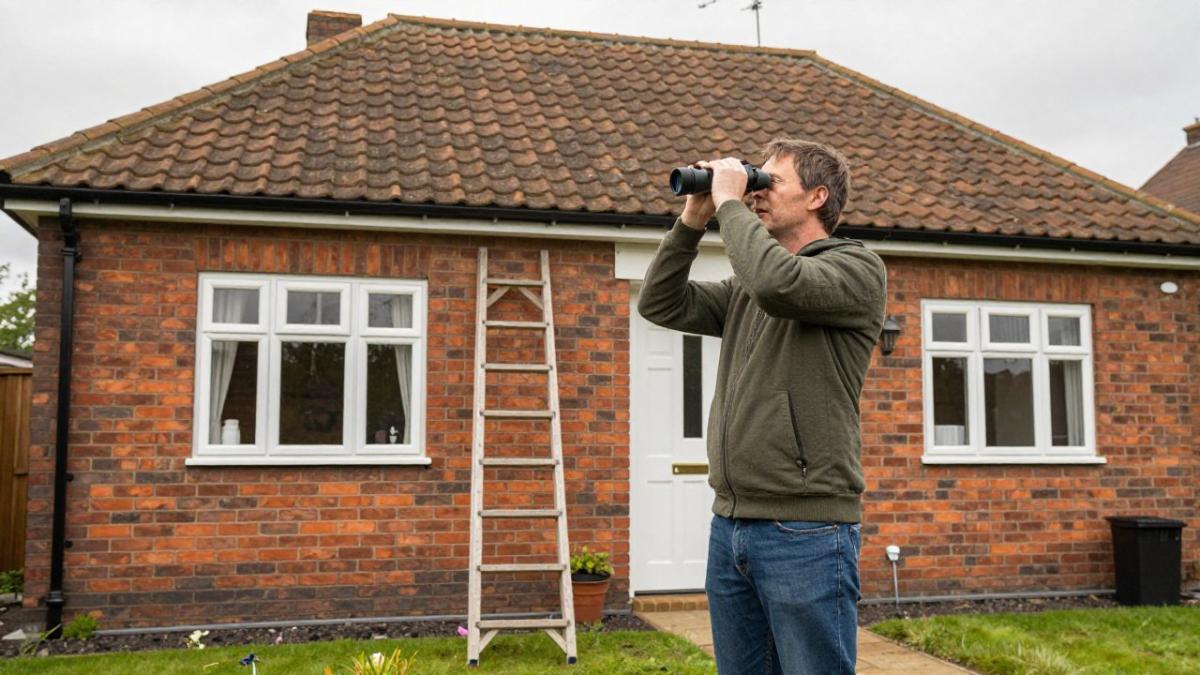
Work through the inspection in this order:
- Step back. Stand across the road or at the far end of the garden for the widest view of the roof covering.
- Scan the plane. Look for lines that should be straight. A dip or ripple means a problem underneath.
- Check the edges. Look at the verge, ridge and eaves for lifted or missing pieces.
- Zoom in on joints. Chimneys, vents and skylights are where flashing fails first.
- Look down. Check gutters and downpipes from ground level for sagging or overflow.
- Go inside. Check upstairs ceilings and loft timbers for stains, damp or daylight.
Watch out: never walk a pitched roof, and never lean a ladder against a gutter. Both are common causes of serious injury and expensive damage. If a check needs someone on the roof, that is a job for a professional.
Ground-level inspection: what to look for and how
You do not need to leave the ground to catch most problems. Use binoculars or a phone camera with zoom, and work in a consistent order so you do not miss the same spot every time.
- Ridge and hip lines. These should be straight and the mortar or dry-fix system intact. A wavy ridge line suggests movement underneath.
- Verges and eaves. Look for lifted edge tiles, missing mortar and gaps where wind has worked under the covering.
- Chimney and flashing. Check the lead or mortar around the chimney stack for cracks, gaps or lifting. This is the most common leak point on a pitched roof.
- Valleys. Where two roof planes meet, debris collects and water concentrates. A dark, damp-looking valley after dry weather is a warning.
- Gutters and downpipes. From the ground, look for sagging runs, overflow staining on the wall below, and downpipes that do not reach the drain.
- The wall below the roofline. Tide marks, green algae or damp patches on the render or brick just under the eaves often mean water is getting behind the gutter.
Ladder safety if you must go up
Some checks, clearing a low gutter, for example, may need a ladder. If so, treat it as a controlled task.
- Use a ladder rated for domestic use and check it before every use for cracks, missing feet or damaged rungs.
- Place it on firm, level ground, at roughly a 75-degree angle (one unit out for every four units up), and secure the top (Safe use of ladders and stepladders).
- Keep three points of contact at all times and do not overreach, move the ladder rather than stretch.
- Never work alone, and never in wind, rain, ice or poor light.
- Do not lean a ladder against a gutter, a downpipe or a plastic fascia; they are not designed to take the load.
If the job needs you above the first floor, on a pitched surface, or anywhere near a fragile roof covering, stop. That is professional work.
The loft: the safest place to see the roof from inside
A loft inspection is low-risk and often more revealing than looking at the outside. Take a torch, and go up after heavy rain rather than in dry weather.
- Look for daylight through the roof covering, a clear sign of a gap or missing tile.
- Check timbers for dark staining, damp patches or white mould, especially around the chimney breast and under valleys.
- Look for water tracking along rafters or felt; water often runs sideways before it drips.
- Check insulation for compressed or wet patches, which point to a leak above.
- Smell the air. A musty, earthy smell in a dry loft usually means moisture is getting in somewhere.
Watch out: lofts are full of hazards, exposed nails, loose boards, poor lighting and insulation that hides joists. Walk only on proper walkways or joists, and never stand on the ceiling between them.
Signs of Roof Damage You Should Never Ignore
Water ingress rarely announces itself. The warning signs of roof damage usually show up indoors first, by which point the leak has been running a while. If you spot any of these, get the roof looked at promptly:
- Brown or yellow stains on upstairs ceilings
- Damp patches on chimney breasts or around skylights
- Mould or a musty smell in the loft
- Daylight visible through the roof boards
- Granules collecting in gutters from worn shingles
- Cracked, slipped or missing tiles
- Sagging roof lines or a spongy feel underfoot in the loft
Not sure whether you are looking at a small repair or a bigger job? Our guide to roof repair vs replacement cost walks through how to tell the difference before you commit to anything.
A stain that grows is a sign of a leak. A stain that stays the same size may be old. Either way, it is worth having it checked.
Material-Specific Care for Tiles, Slate and Flat Roofs
Different roof coverings fail in different ways, so care has to match the material.
Clay and concrete tiles are tough but brittle.
Natural slate lasts decades but is fragile at the edges. Look for slipped slates and check that the fixings have not corroded.
Flat roofs rely on a continuous roof membrane. Check the membrane for blisters, splits and ponding water after rain.
Moss and algae are a symptom, not just a cosmetic issue.
When to Call a Professional Roofer
Call a professional when the work involves height, the structure, or anything you cannot see clearly from the ground. That covers most real repairs.
Ring a roofer if you find:
- Missing, slipped or broken tiles you cannot safely reach
- Any active leak or water ingress indoors
- Damaged flashing around a chimney or skylight
- A sagging roof line or soft timbers in the loft
- Storm damage after high winds
- Anything on a flat roof
A good roofer will also tell you when a repair is not needed. Ask for a written quote that itemises labour and materials, and ask what happens if the job turns out bigger than expected.
At Cedar Roofing & Renovations, we handle roof repairs, new roofs and roofline work, alongside extensions and loft conversions. You can see the full range of roofing and renovation services we offer before you get in touch.
Book a Free Roof Inspection with Cedar Roofing & Renovations
A roof does not need much. Two proper looks a year, clear gutters, and a phone call when something changes. That routine is the difference between a repair and a replacement.
If you would rather have someone check it properly, we can help.
Get started with Cedar Roofing & Renovations and book a free roof inspection.
Most homeowners put off the first inspection because they are not sure what they are looking at.
Frequently Asked Questions
How often should homeowners inspect their roof?
Aim for a visual inspection twice a year, ideally in spring and autumn, plus a check after any major storm. A professional roof maintenance schedule should include an annual inspection by a qualified roofer. Regular checks help you spot small issues like cracked tiles or blocked gutters before they turn into costly repairs.
Can I inspect my roof safely without climbing onto it?
Yes. Use binoculars from the ground to look for missing tiles, sagging areas and damaged flashing. Check gutters from a ladder only if it is stable and you have someone with you. Never walk on a pitched roof. If you suspect a problem, call a professional roofer for a safe assessment.
What should be included in a roof maintenance checklist?
A good roof maintenance checklist covers clearing leaves and debris, cleaning gutters and downpipes, checking for broken or missing tiles, looking for moss and algae, inspecting flashing around chimneys and skylights, and checking inside the loft for leaks or damp. Add seasonal tasks like pre-winter checks and post-storm inspections.
When should I call a professional roofer?
Call a professional if you notice water stains on ceilings, damp patches in the loft, missing tiles, or damaged flashing. Also call if your roof is over 20 years old or if a storm has caused visible damage. A professional roofer can assess the problem safely and advise on repairs without the risk of DIY injury.