 How-to
9 Signs of Roof Storm Damage Every Homeowner Should Know
Last Updated: 26 October 2026
Quick Summary
The signs of roof storm damage include missing, cracked or slipped tiles, loose ridge tiles, granule loss on flat roofing, dented or lifted flashing, daylight in the loft, water stains, damp patches and blocked gutters. Check from the ground with binoculars and inside the loft with a torch, and never climb onto a wet or windy roof. Photograph any damage and contact your insurer promptly.
- Two or more storm damage signs together usually mean the storm has done real damage.
- Stay off the roof and inspect from the ground or inside the loft instead.
- Photograph all damage before anything is moved and report it to your insurer promptly.
- Move furniture away from a leak and switch off electrics if water is near them.
- Ask for a clear written quote before any repair work starts.
Table of Contents
- Why Catching Roof Storm Damage Early Matters
- 9 Signs of Roof Storm Damage to Look For
- How to Inspect a Roof for Damage Safely
- What to Do After Roof Storm Damage
- Dealing With a Roof Leak After Heavy Rain
- Roof Storm Damage Repair: What to Expect
- Get a Free Roof Inspection Quote
- Frequently Asked Questions
Why Catching Roof Storm Damage Early Matters
Storm damage rarely announces itself. A missing tile or a hairline crack can sit unnoticed for months, quietly letting water into your loft, insulation and timber. By the time a stain appears on the ceiling, the problem has usually spread well beyond the roof itself. Spotting the signs of roof storm damage early is what separates a small, cheap repair from a structural headache. Wind and driving rain test every roof, and older properties take the worst of it. Below, we'll show you exactly what to look for, how to check safely, and what to do next.
9 Signs of Roof Storm Damage to Look For
Most storm damage shows up in predictable ways. The key is knowing which clues matter and which are harmless. Here are the signs we check first on any inspection.
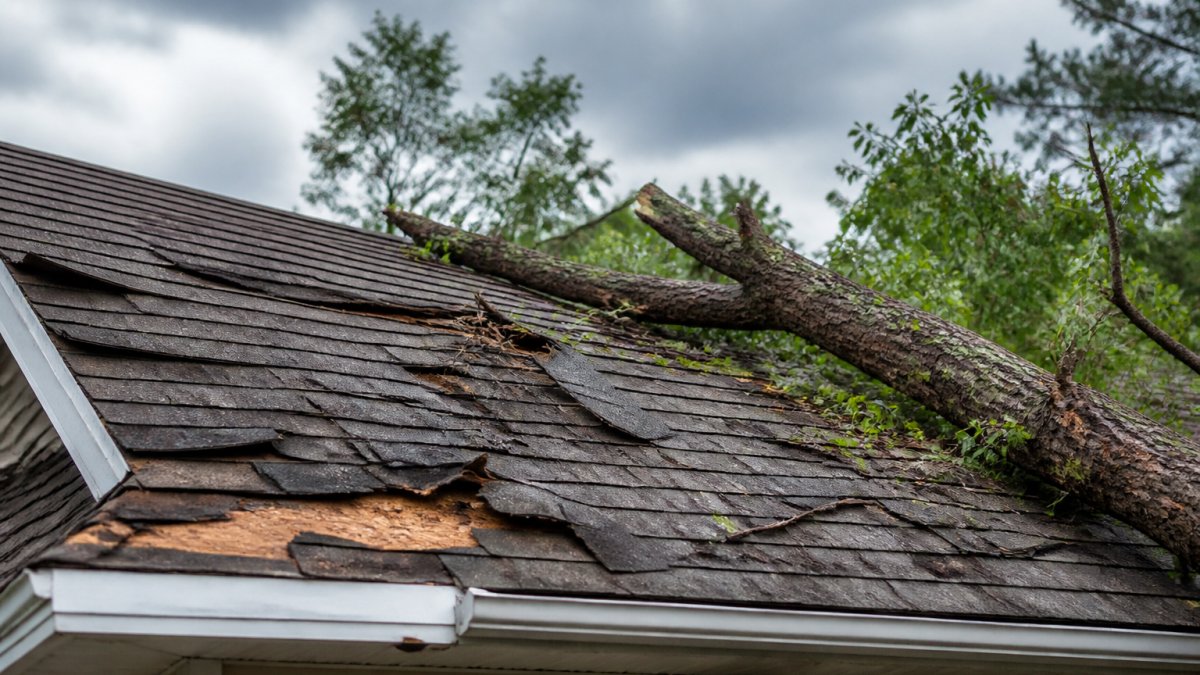
- Missing or slipped tiles after high winds
- Cracked or broken tiles from flying debris
- Loose ridge tiles along the top of the roof
- Granule loss on flat roofing surfaces
- Dented or lifted flashing around chimneys and valleys
- Daylight showing through in the loft
- Water stains on ceilings or loft timbers
- Damp patches on internal walls
- Blocked or overflowing gutters full of grit and broken tile
Any one of these is worth a second look. Two or more together usually means the storm has done real damage.
Missing, Cracked or Displaced Tiles
The most obvious sign is a gap where a tile should be. High winds lift and snap tiles, and debris knocks them loose. Check the ground below downpipes for broken pieces. From the ground, use binoculars to scan each roof slope. A displaced tile lets rain straight through, so treat it as urgent.
Granule Loss on Flat Roofing
Flat roofs and felt coverings shed their protective granules as they age, and storms speed this up. Look for bare patches or grit collecting in gutters. Once the surface is exposed, water gets in and the covering fails faster. If you can see the backing material, the roof needs attention.
How to Inspect a Roof for Damage Safely
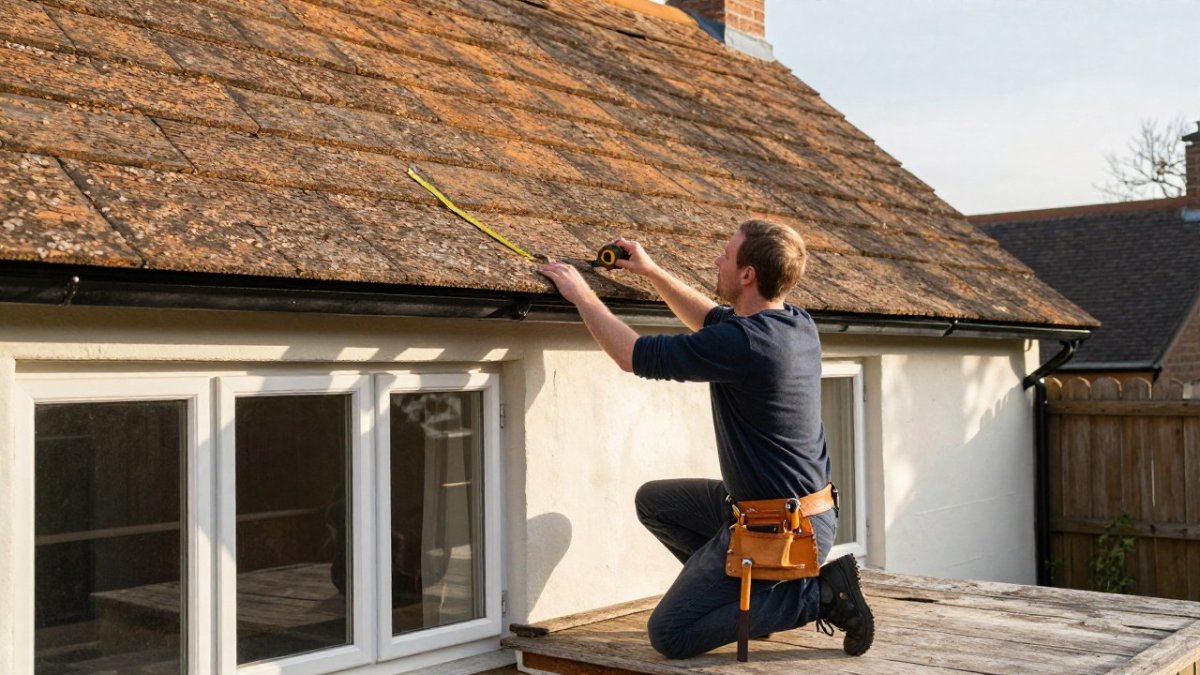
Safety comes first, and the honest answer is that you should stay off the roof. Most checks can be done from the ground or from inside the loft. Here is how we would do it safely.
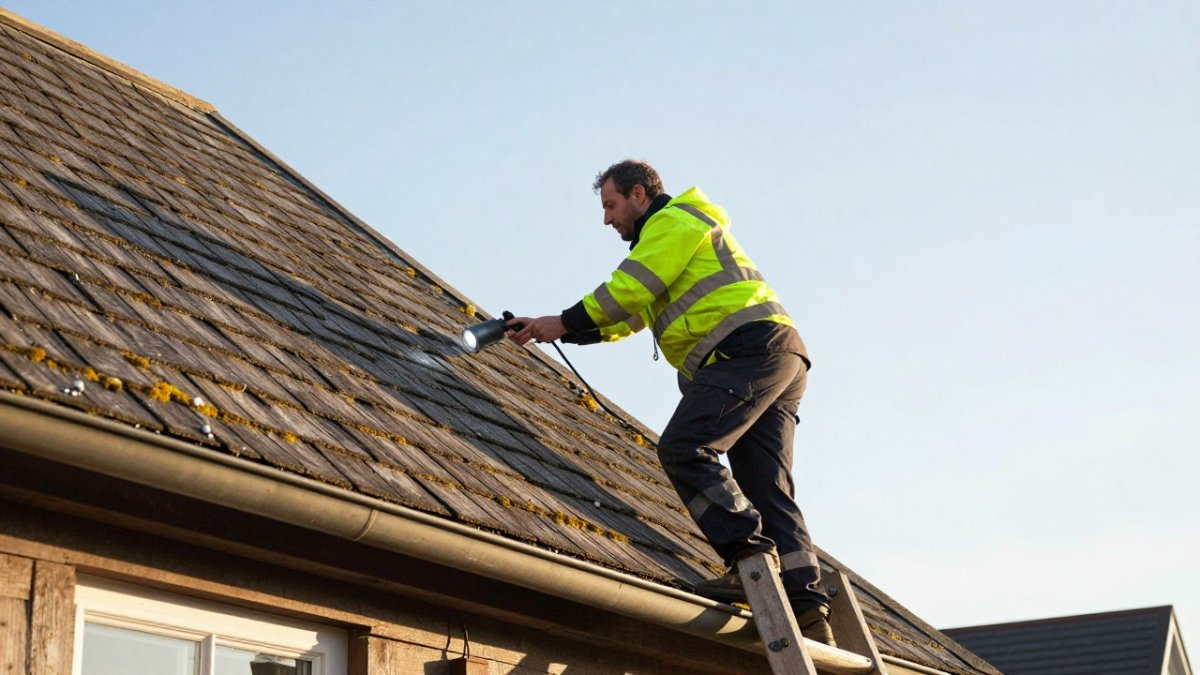
- Stand well back and scan the roof with binoculars
- Check the ground for fallen tiles and grit
- Look at gutters and downpipes for blockages
- Go into the loft with a torch and look for daylight
- Check ceilings and walls for stains or damp
- Photograph anything that looks wrong
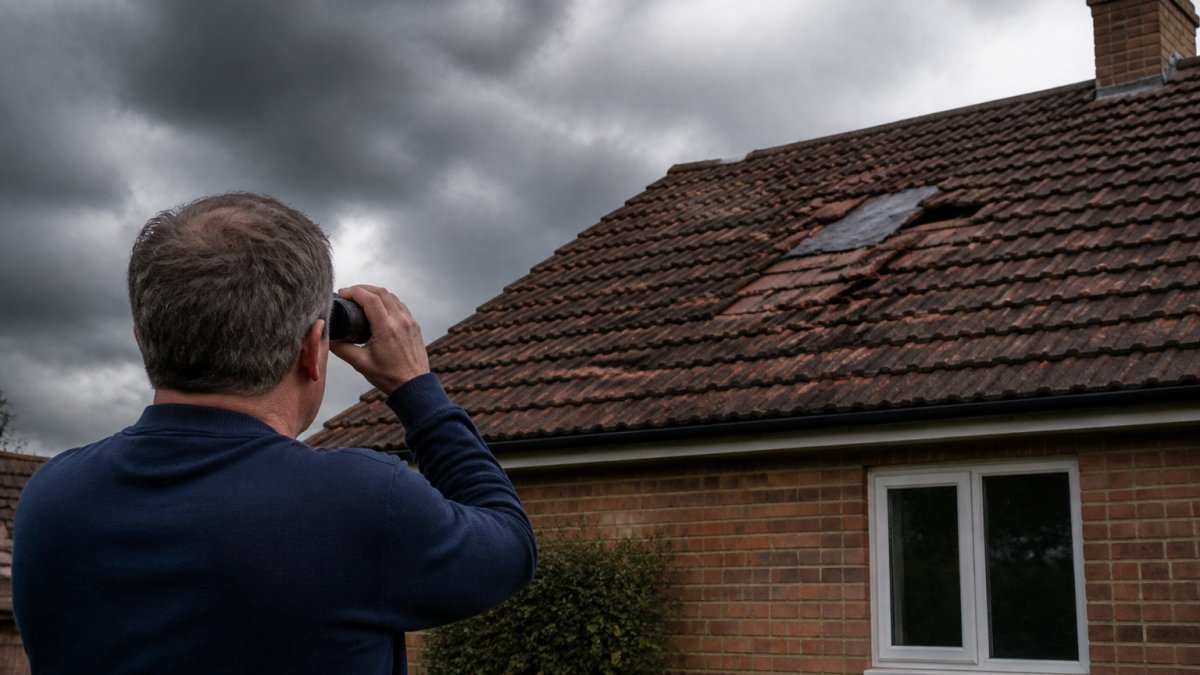
Never climb a ladder onto a wet or windy roof. If you spot a problem, leave the climbing to a professional. The Health and Safety Executive guidance on working at height explains why roof work is high-risk and best left to trained tradespeople.
What to Do After Roof Storm Damage
Once you have spotted damage, act in a clear order. First, keep everyone safe and stay off the roof. Second, photograph everything for your insurer before anything is moved. Third, contact your home insurer to check what your policy covers. Storm damage is often included, but you need to report it promptly. Fourth, get a professional inspection so you know the true extent of the problem. Keep any broken tiles as evidence. Do not attempt temporary fixes on a ladder yourself. A quick, documented response makes any claim far smoother.
Dealing With a Roof Leak After Heavy Rain
A roof leak after heavy rain needs fast action to limit damage inside the home. Move furniture and valuables away from the leak, and place a bucket underneath. If water is near electrics, switch off the supply at the consumer unit and call an electrician. Puncture a bulging ceiling with a small hole to release trapped water safely. Then call a roofer for an emergency repair. Quick containment stops water spreading into insulation and joists, which is where the real cost builds up. The Met Office guidance on severe weather is worth checking so you know when the next storm is due.
Roof Storm Damage Repair: What to Expect
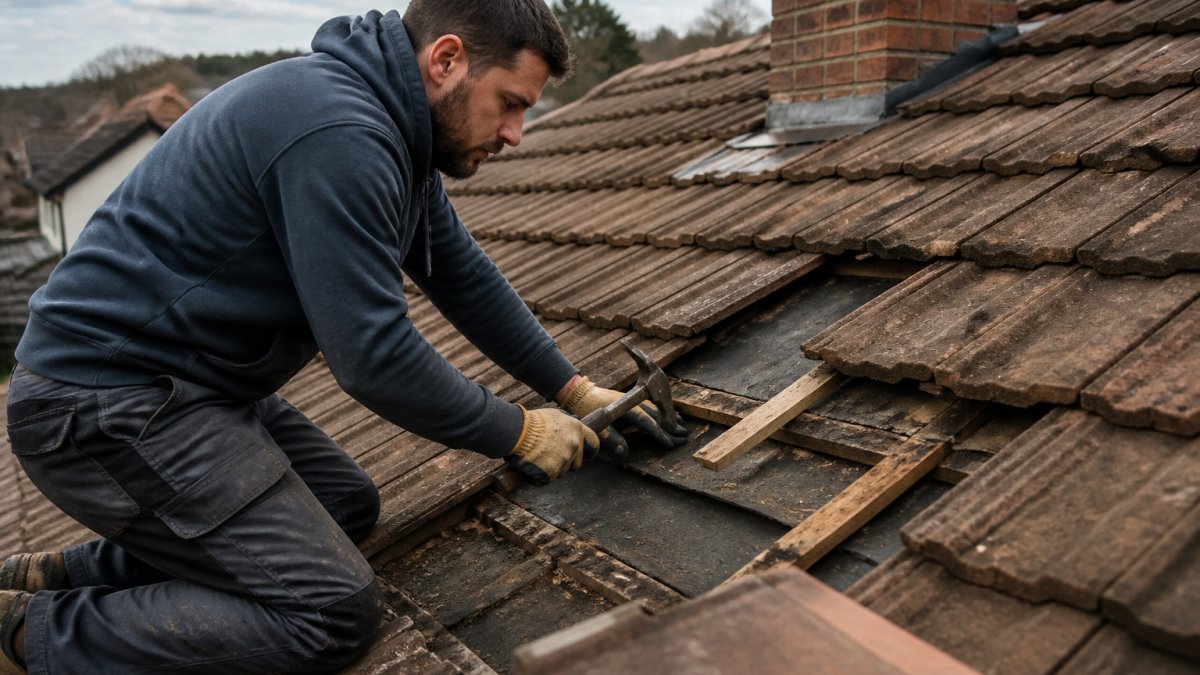
Repair work depends on what the storm has done. A few slipped tiles is a quick fix. Cracked flashing or a failed flat roof takes longer. A professional will inspect, explain the cause, and give you a clear written quote before work starts. Ask what is included and whether any hidden costs could appear. A reputable firm will put everything in writing.
| Damage Type | Typical Fix | Urgency |
|---|---|---|
| Missing or slipped tiles | Re-seat or replace tiles | High |
| Cracked flashing | Replace and seal flashing | High |
| Granule loss on flat roof | Repair or recover surface | Medium |
| Blocked gutters | Clear and check fixings | Medium |
| Internal damp | Trace leak, repair, dry out | High |
Get a Free Roof Inspection Quote
Storm damage gets worse with every downpour, so the sooner it is checked, the better. If you have spotted any of the signs of roof storm damage above, do not wait for a ceiling stain to confirm it. Cedar Roofing & Renovations offers expert roof repairs and full inspections across Norfolk and Suffolk. We are family-run, we quote in writing with no hidden costs, and we can work to your timeline before winter sets in. Our team handles everything from emergency repairs to new roof installations and loft conversions.
Get started with Cedar Roofing & Renovations and get a free quote today.
Frequently Asked Questions
What are the common signs of storm damage to a roof?
Look for missing or cracked tiles, granules collecting in gutters, dented flashing, and daylight showing through the roof space. Inside, check for water stains on ceilings, damp patches on walls, and sagging areas. After a storm, also inspect for debris on the roof and damaged pointing around chimneys. Catching these roof storm damage signs early prevents small issues from becoming costly repairs.
Can a roof leak after heavy rain without visible damage?
Yes. A roof leak after heavy rain can occur even when no damage is visible from the ground. Water can enter through hairline cracks in flashing, failed seals around vents, or porous mortar that looks intact. Damp patches on ceilings or walls, musty smells in the loft, and peeling paint are often the first clues. A professional inspection can trace the source before it spreads.
Should I contact a roofer or my insurer after storm damage?
Contact your insurer first to check your policy and start a claim, then arrange a professional inspection. Keep photos and notes of any damage, and avoid temporary repairs that could affect the claim. A reputable roofer can provide a written report to support your claim and carry out roof storm damage repair once approved. Never attempt to climb onto the roof yourself.
How soon should roof storm damage be repaired?
Arrange repairs as soon as possible, ideally within days of spotting the damage. Delaying allows water to penetrate further, damaging insulation, plasterboard, and structural timbers. Temporary measures like tarpaulins can limit further ingress while you wait for a full repair. Book a professional assessment quickly, especially before the next spell of heavy rain.