 How-to
How to Spot Roofing Problems Before They Cost You
Last Updated: November 21, 2026
Quick Summary
To spot roofing problems, walk slowly around the outside of your home every few months and scan the roofline, gutters, tiles and chimney from ground level, never from a ladder. Check indoors too for ceiling stains, damp patches and daylight in the loft. Sort findings into emergency, soon and routine so you know how quickly to act.
- Keep both feet on the ground and use binoculars on a dry, well-lit day.
- Broken tile pieces on the path after a storm mean something has come loose above.
- Daylight through the roof in a darkened loft is the clearest sign of a gap.
- Roof leaks follow the rain, while condensation builds up in cold weather.
- Call a roofer the same day if water is entering a room or the roofline sags.
Table of Contents
- Start with a Safe Visual Check from the Ground
- Common Roofing Problems to Look For
- Roof Leak Warning Signs Inside Your Home
- Your Room-by-Room Roof Inspection Checklist
- Telling a Roof Leak Apart from Condensation or Plumbing
- When to Call a Roofer for a Leak
- Book a Professional Roof Survey with Cedar Roofing & Renovations
- Frequently Asked Questions
Start with a Safe Visual Check from the Ground
Learning how to spot roofing problems starts with one rule: keep both feet on the ground. Most early warning signs are visible from a garden path, a driveway or the pavement opposite, and you never need a ladder to catch them.
We would rather you looked from a safe distance than climbed up and risked a fall. A slow walk around the outside of your home, repeated every few months, catches most trouble early. Binoculars help. So does a dry day with decent light.
Here is what to do, step by step:
- Stand back far enough to see the whole roof slope.
- Scan the roofline from left to right, slowly.
- Look at the gutters, then the tiles, then the chimney.
- Note anything that looks different from last time.
- Take photos from the ground for later comparison.
The Health and Safety Executive guide to working at height is blunt about ladders: falls from height remain one of the biggest causes of serious injury at home. A visual check from ground level removes that risk entirely.

Common Roofing Problems to Look For
The most common roofing problems are damaged or missing tiles, moss and algae growth, blocked gutters, and failing flashing around chimneys and vents. Each one leaves a visual clue you can spot without climbing. What separates a useful check from a vague one is knowing how the covering on your particular roof fails, because slate, clay tiles, concrete tiles and flat roof membranes all give different warnings.
Damaged, Missing and Slipped Tiles
Tiles take the brunt of wind and rain. Look for tiles that are cracked, curling at the edges, or sitting out of line. A slipped tile often shows as a gap in the pattern. Missing tiles leave a dark patch where the roof covering should be.
The material matters. Natural slate is brittle and splits along the grain; a cracked slate usually shows as a clean diagonal break, and individual slates can slip when their fixings corrode.
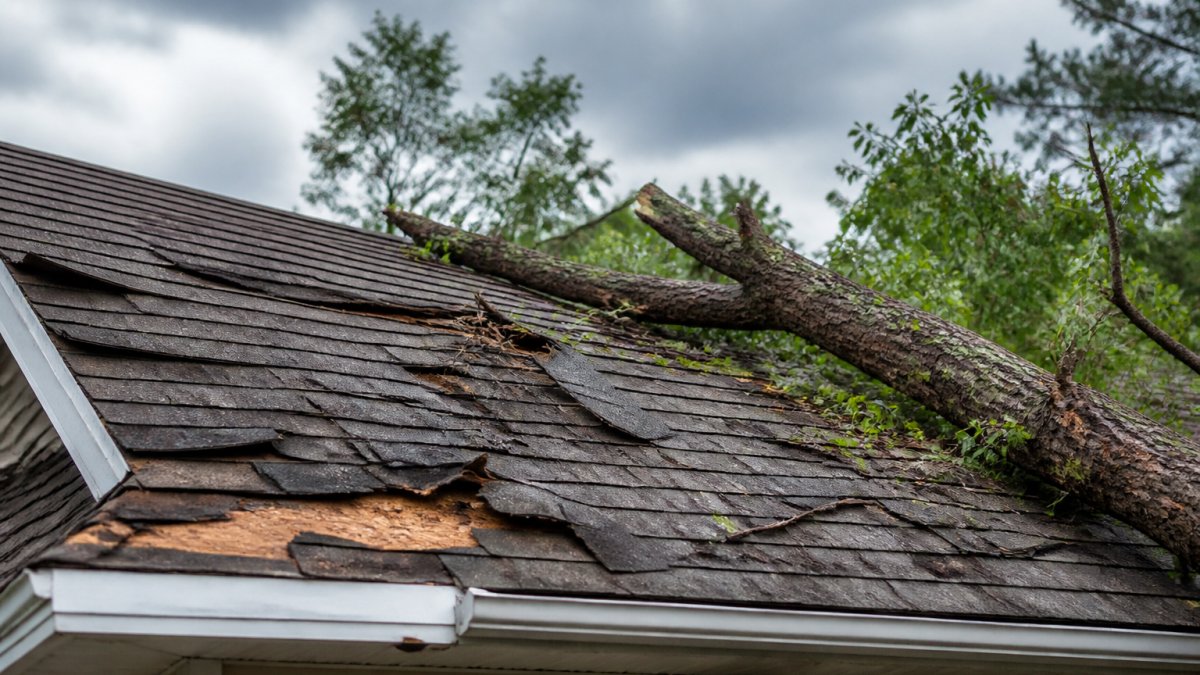
After heavy rain or a storm, check the ground below the roofline. Broken tile pieces in the garden or on the path mean something has come loose above.
Watch out: a single slipped tile high on a slope can let water track sideways along the underlay and appear well away from the gap, so do not assume the stain below matches the missing tile above.
Moss, Algae and Blocked Gutters
Moss growth holds water against the roof covering. Over time, that trapped moisture works its way in. Green streaks and black algae stains are early warning signs worth noting. Moss thrives on north-facing and shaded slopes that stay damp longer, and on porous concrete tiles more than on smooth slate.
Gutters and downpipes matter just as much. Blocked gutters overflow during heavy rain, sending water down walls and into the foundations. Check for granules, moss and debris collecting at the gutter edge. If you can see plants growing in the gutter, it has been blocked for a while. On older properties, cast-iron and asbestos-cement gutters crack and sag with age, while modern uPVC lengths pull apart at the joints when they expand in sun and contract in frost.
For ongoing prevention, our guide on roof maintenance tips for homeowners walks through the seasonal jobs that stop these problems returning.
Roof Leak Warning Signs Inside Your Home
Roof leak warning signs indoors are easy to miss until damage is well advanced. Water stains on ceilings, damp patches on walls, and a musty smell in the loft are the three to watch.
Water ingress rarely appears directly below the leak. It travels along timbers and rafters before finding a way through. A ceiling stain in a bedroom might trace back to a chimney flashing two metres away.
Look for:
- Brown or yellow rings on ceilings and upper walls
- Peeling paint or bubbling plaster
- Damp patches that grow after heavy rain
- Dark streaks on chimney breasts
- A musty smell in upstairs rooms
Storm damage often makes these signs appear suddenly. If you notice any of them, note the date and the weather at the time. That record helps a roofer trace the source.
Your Room-by-Room Roof Inspection Checklist
A roof inspection checklist works best when you follow the same route every time. This keeps you from missing the same corner twice. Work from the loft down, then outside, and keep both feet on the ground throughout. Do not climb onto the roof, do not stand on a ladder to reach the gutter, and do not put weight on a flat roof unless you know it is designed to take it. A ground-level and loft-level routine catches most of what matters, and anything that needs a closer look is a job for someone with the right access equipment.
Use this checklist:
- Loft: daylight through the roof, damp timbers, water stains
- Loft: insulation that looks wet or compressed
- Top floor ceilings: stains, cracks, peeling paint
- Upper walls: damp patches near the roofline
- Chimney breast: dark streaks or damp
- Outside: missing, cracked or displaced tiles
- Outside: sagging roofline or dips in the roof slope
- Outside: flashing and sealant around chimney, vents and skylights
- Outside: gutters, downpipes and drainage
Checking the Loft for Daylight and Damp
Daylight in the loft is the clearest sign of a gap in the roof covering. Go up during the day and turn the lights off. Any pinpricks of light need investigating. Feel the timbers for dampness and look at the underside of the roof for water stains. Check that ventilation is clear, because poor airflow leads to condensation, which is a different problem entirely.
While you are up there, note the roof's age if you know it and the material you can see. Slate, clay and concrete coverings have different expected lifespans, and a roofer will ask. Do not disturb insulation or boarding to look further; if something looks wrong, photograph it from where you stand.
Sorting What You Find by Urgency
Not every finding needs the same response. Sort what you see into three groups so you know how quickly to act.
- Emergency: water actively entering a room, a sagging roofline, or a large section of covering missing after a storm. Keep people clear of the area and call a roofer the same day.
- Soon: a damp patch that grows after rain, displaced tiles, or flashing that has pulled away. Book a survey within days rather than weeks.
- Routine: moss, minor algae staining, or gutters that need clearing. Add these to seasonal maintenance and monitor them.
Recording What You Find
A dated photograph from the same spot each time is worth more than memory. Note the date, the weather in the days before, and which part of the roof the finding relates to. If storm damage is involved, keep the notes and images together, because an insurer will want a record of when the problem appeared. A visual check shows what is visible; it does not prove the cause, so leave that judgement to the professional who inspects it.
Telling a Roof Leak Apart from Condensation or Plumbing
Not every damp patch is a roof leak. Condensation and plumbing faults produce similar stains, and misreading them wastes money on the wrong repair.
Condensation tends to build up in cold weather and in poorly ventilated lofts. It shows as misted windows, black mould on walls, and damp that appears evenly rather than in one spot. Plumbing leaks usually sit near pipework, bathrooms or radiators and show up regardless of the weather.
Roof leaks follow the rain. If a stain grows after a storm and dries out in fair weather, the roof is the likely culprit.
Watch out: treating a roof leak as condensation, or the reverse, is one of the most expensive mistakes we see. It leads to the wrong trade being called and the real defect getting worse.
When to Call a Roofer for a Leak
Call a roofer for a leak when water is entering the home, when tiles are missing, or when the roofline looks sagged. Those are urgent. Small cosmetic issues can wait for a routine visit.
Use this triage guide:
| Sign | Urgency | Action |
|---|---|---|
| Water entering a room | Urgent | Call a roofer today |
| Missing or displaced tiles | Urgent | Call within days |
| Sagging roofline | Urgent | Call today, structural risk |
| Damp patch after storms | Soon | Book a survey |
| Moss or blocked gutters | Routine | Book seasonal maintenance |
| Minor algae staining | Routine | Monitor and clean |
Before you commit, it pays to know how to avoid cowboy roofers. Ask for written quotes, check insurance, and be wary of anyone who turns up unannounced after a storm.
If a leak is confirmed, weigh up roof repair versus replacement cost before agreeing to work. A repair is often the right call, but an ageing roof may cost more over time.
Book a Professional Roof Survey with Cedar Roofing & Renovations
A professional roof survey gives you a clear picture of hidden defects that a ground-level check cannot reach. Cedar Roofing & Renovations is a family-run business serving Norfolk and Suffolk, with specialists in both roofing and home renovations.
Our team handles expert roof repairs, new roof installations, and larger projects like loft conversions and house extensions.
If you have spotted warning signs and want certainty before winter sets in, book a survey with Cedar Roofing & Renovations. We offer free quotes, clear findings, and honest advice on repairs, new roofs, loft conversions and extensions. Get started with Cedar Roofing & Renovations and protect your home before a small defect becomes a major repair.
Frequently Asked Questions
What are the first signs of roof damage?
The earliest signs usually show up before water gets inside. Look for a few slipped or cracked tiles, granules collecting at the bottom of a downpipe, dark patches of moss spreading across the roof covering, and damp marks on ceiling boards. Inside the loft, small pinpricks of daylight or stained rafters are worth checking. Catching these early warning signs means a repair stays small rather than turning into structural damage or a full replacement.
How can I check my roof for problems safely?
Stay on the ground. Use binoculars from the far side of the garden to scan the roofline, tiles and chimney flashing, and check gutters from a stable ladder only if you are confident at height. Never walk on a pitched roof, especially after rain or in frost. For anything above gutter level, or if you spot something concerning, book a professional roof inspection rather than climbing up yourself.
Can missing or slipped tiles cause a leak?
Yes. A single missing or displaced tile leaves the underlay exposed, and while modern underlay sheds most water for a while, it is not a permanent barrier. Wind-driven rain during a storm can push water sideways under neighbouring tiles and into the loft. Slipped tiles also let water track down rafters and insulation, so a small gap can produce a ceiling stain some distance from the actual defect.
When should I call a roofer about roof damage?
Call straight away if water is coming through a ceiling, if daylight is visible through the roof in the loft, if the roofline is sagging, or if storm damage has left tiles on the ground. For slower signs such as moss growth, a few cracked tiles or damp patches that come and go, book an inspection within a few weeks rather than leaving it through the winter. Early repairs are almost always cheaper than waiting for water ingress to spread.